
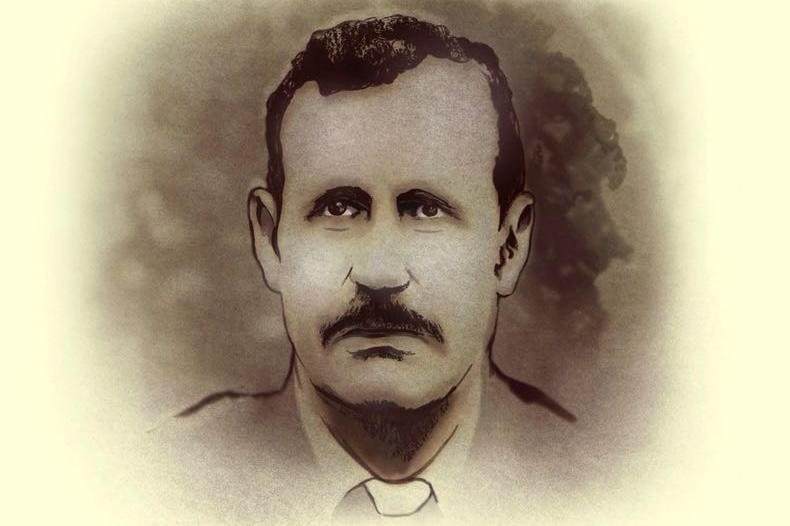
Some sporting innovations are the result of years of planning and experimentation, but this is not the case for rugby sevens. The transformative creation, still played today across the world, came from one man’s attempt to raise money for his local club. The man in question was Ned Haig, a talented rugby player from Melrose in the Scottish Borders who came up with the idea for rugby sevens in 1883, 12 years after the foundation of the Rugby Football Union. His idea was not a complicated one, but its impact has been extremely long-lasting.
From humble origins, the format would eventually spread across the world and become an Olympic and Commonwealth Games sport. Needless to say, Haig could hardly have imagined the scale of the legacy he was creating when the first tournament kicked off in Melrose.
Background
Edward ‘Ned’ Haig was born in Jedburgh on 7 December 1858, but his family moved to nearby Melrose when he was young. After leaving school, he worked at a local butcher’s shop. His interest in sport was sparked by the traditional Fastern’s E’en Ba game, a chaotic ball game played in Scotland as part of Shrove Tuesday celebrations. Although the game was very different from organised rugby, it gave Haig an early enthusiasm for ball sports, which was later channelled towards rugby union.
He joined Melrose Rugby Football Club in 1880, initially playing for the second team before earning a place in the first team. Haig quickly established himself as a talented player and was also selected to represent the newly created South of Scotland team.
The Idea That Changed Rugby
In 1883, Melrose Rugby Football Club was looking for ways to raise much-needed funds. Haig suggested staging a sports day that would include a rugby tournament alongside other events such as foot races, drop-kicking, dribbling races and place kicking. While a tournament was a perfectly sound suggestion for a fundraiser, the issue was that a traditional rugby match featured 15 players per team and would last 80 minutes.
Getting enough players for a tournament was a challenge in itself, but an even bigger hurdle was that only a few games of rugby could be played in an afternoon, making it difficult to run a meaningful tournament. Haig’s solution to these challenges was remarkably straightforward. Instead of 15 players, each team would have seven, while matches would last just 15 minutes.
The changes created a very different style of rugby. With fewer players meaning each had to cover a larger area of the pitch, so there was considerably more space to attack. Rugby has always been a physical game, but sevens places a greater emphasis on speed and stamina due to the huge amount of ground players need to cover.
Haig’s idea became a reality on 28 April 1883, when Melrose held its sporting fundraiser. Eight teams entered the rugby tournament, with spectators travelling from surrounding areas to watch the action. Haig played for the home side as Melrose defeated local rivals Gala in the final.
The winning team received a silver trophy donated by the ladies of Melrose. The cup, now known as the Ladies Cup, remains an important part of the history of the tournament and is still associated with the origins of rugby sevens.
From a Fundraiser to a New Sport
The success of the first tournament quickly showed that Haig’s idea was more than an effective fundraising exercise. Other clubs in the Scottish Borders began organising their own competitions, and sevens developed into an important part of the local rugby calendar. Part of the reason it was able to spread so easily was that it could be played on existing rugby pitches, without any need to alter the dimensions or goalposts.
The Borders eventually became famous for their sevens tournaments, with clubs competing against each other in events that attracted substantial crowds. The format’s popularity was helped by its speed and accessibility. As well as being entertaining to watch, due to its end-to-end nature, supporters would get to enjoy several matches in one trip, rather than a single 15-a-side game.
The game gradually spread beyond the Scottish Borders. By 1926, rugby sevens had reached England, where the Middlesex Sevens became one of the sport’s better-known competitions. From there, the format continued to spread to other countries, including major rugby nations such as South Africa, New Zealand and Australia.
For decades, however, sevens remained largely a club and regional game rather than a major international sport. That began to change in the second half of the 20th century.
Haig’s Lasting Legacy
View this post on Instagram
Haig continued to play an active role at Melrose after retiring from competition. He served for several seasons on the club’s General and Match committees and remained involved with the organisation that had played such an important role in his life. He died in Melrose on 29 March 1939, aged 80.
Haig’s contribution to rugby was formally recognised decades after his death. In 2008, he and Melrose RFC were inducted into the IRB Hall of Fame for their role in the creation of rugby sevens. A plaque was also unveiled in Melrose in 2022 ahead of the Melrose Sevens tournament, to commemorate Haig’s contribution to the sport. Approved by Historic Environment Scotland, the plaque calls him the ‘founder of rugby sevens’.
His gravestone, erected by the border rugby clubs, also carries a similar tribute, describing him as the “originator of seven-a-side Rugby”. It is a real achievement that a local butcher’s assistant who lived in a small town holds such a significant place in sporting history.
Today, rugby sevens is played across the world and on the biggest sporting stages. From the Borders Sevens circuit to the Olympic Games, every seven-a-side match ultimately owes something to the idea Haig put forward in Melrose in 1883. Few sporting pioneers can claim to have changed their sport so dramatically with such a simple idea. Haig’s legacy is not just the creation of rugby sevens, but the remarkable growth of a format that has carried his hometown’s name around the world.