
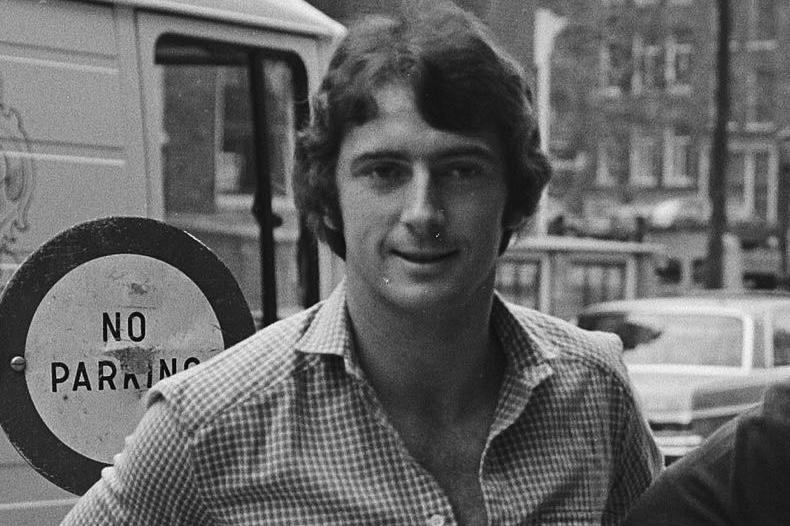

In the summer transfer window of 2026/27, the Premier League witnessed five moves worth £100m or more, with Enzo Fernandez’s £125m move from Chelsea to Manchester City leading the way. The money in football in the modern era has changed the sport in many ways, but the best players attracting huge fees is nothing new. It’s just the number of zeroes at the end of the deal that has changed!
In the future we may say that the summer of 2026 was when nine-figure deals became the norm. However, all the way back at the start of 1979, British football had not yet witnessed its first seven-figure transfer. Back when being a millionaire meant something, not simply that you could afford a small house in London, Trevor Francis made history when he became the first player to be sold for £1m.
Earning His Move
 Trevor Francis began his career playing for Birmingham City, making his debut in 1970 when he was still just 16 years old. Playing in the old Second Division, the youngster showed plenty of promise, netting 15 league goals in 22 appearances. At the end of the following season, the Blues were promoted and Francis continued to hit the back of the net on a regular basis in the top flight.
His scoring rate dipped a little as he adapted to the higher standard of play, while the same was true of his club, who were no longer the big fish in the small pond. He scored eight times in 1972/72 and then nine the season after that. From that point onwards though, Francis really began to establish himself as one of the top strikers around. The table below shows how his scoring progressed during his time with Birmingham.
| Season | Appearances (all competitions) | Goals (all competitions) |
|---|---|---|
| 1970/71 | 26 | 15 |
| 1971/72 | 48 | 15 |
| 1972/73 | 37 | 8 |
| 1973/74 | 47 | 9 |
| 1974/75 | 28 | 14 |
| 1975/76 | 39 | 18 |
| 1976/77 | 45 | 21 |
| 1977/78 | 48 | 29 |
| 1978/79 | 11 | 4 |
In 1977/78 they finished 11th in the top flight, in large part down to the goals from their star man. He made his England debut in 1977, selected by Don Revie, as the Three Lions lost 2-0 to the Netherlands. He played seven times for his country that year and a further five in 1978. He only scored twice in his first 12 caps, but his pace, technique, elegance and eye for goal were attracting the attention of several big clubs.
In February 1979 it was Nottingham Forest who pursued him most vigorously, offering a then-British record sum for the striker. Forest, managed by the brilliant Brian Clough, had won the league and the League Cup in 1977/78 and were challenging for the title as well, in addition to competing in the European Cup.
Peter Withe had been the main goal threat, along with Tony Woodcock and John Robertson, with Garry Birtles scoring freely in 1978/79 as well, but Clough wanted more firepower, and the board backed their charismatic boss. They got their man, the figure typically reported as £1m, earning Francis his place in the history books – not to mention the trivia books.
Was Francis Really the £1m Man?


Brian Clough was a wonderful storyteller and gave the media plenty to report on. He subsequently claimed that the actual fee he had negotiated was £999,9999. He said in his autobiography that he did not want to burden Francis with the pressure of the million-pound tag – nor let the huge sum, as it was back then, go to the player’s head.
Francis himself has said that this was just Clough being Clough. He noted that “Brian was very clever with the media,” and liked to make headlines “whether they were true or not.” He went on to say that his former club “insisted that the fee had to be a million pounds and nothing less”.
In actual fact, it is thought that the real fee, when applicable taxes and fees were included, was closer to £1.15m. That might just be a couple of days’ salary to Cristiano Ronaldo these days, but back then it really was a huge sum, making Francis a true football groundbreaker.
What Was the Old British Record Fee?


A lot has happened between the £125m move of Fernandez in September 2026 and the first recorded record fee of £100, paid by Aston Villa to West Brom for the services of Willie Groves in 1893. There have been various “big moments” in the progression of the British record transfer fee, but none are as well remembered by fans as Francis’s move to Forest.
Jimmy Greaves joined Spurs for £99,000 in 1961, with Denis Law becoming the first six-figure transfer the following year (Man United paid Torino £115,000 for the Scot). More recently, younger fans will recall the £15m of Alan Shearer to Newcastle, or the huge £30m Man United paid Leeds for Rio Ferdinand.
However, as late as 1974, no British club had been involved in a transfer worth more than the £350,000 Everton spent on striker Bob Latchford. The half-million-pound barrier was broken by Hamburg when they signed Kevin Keegan for exactly £500,000 in 1977, while in January 1979 West Brom bought David Mills for £516,000.
That means that the Francis deal more than doubled the old transfer record (with fees and tax), further adding to the attention the move attracted. It would be broken twice more in 1979, but even so, it is Francis’s transfer as Britain’s first £1m footballer that is the deal that is most memorable.
Was He Worth It?
Ah, the million-pound question (or £1.15m – or £1.18m as some sources report it). Unfortunately for Forest, Francis and Clough, this transfer is remembered for what it represented, rather than the stunning football exploits of the player involved.
That said, things started superbly for the new man. Forest retained the League Cup early in 1979, although Francis could not play as he was cup-tied. Regulations meant he was not allowed to play in the European Cup until the final, but luckily for Francis, his teammates did enough to make that happen.
The 1979 final was played in Munich, and Forest beat Malmo 1-0 thanks to a goal from the man of the moment. Francis and Forest would defend the European Cup in 1980, beating Hamburg in Madrid, though Francis was injured. Overall, injuries limited his impact in Nottingham, while Clough rather oddly opted to play him on the right, rather than as a central striker. He was far more effective in the middle, but this was just one of the reasons it didn’t happen for him at Forest.
In the end, he left to join Man City in the autumn of 1981, with Forest making a small profit on the £1.2m deal. His total of 37 goals from 93 matches was a solid return but not what Clough and the board had hoped for when they spent all that money. Even so, Francis’s place in history is assured.