
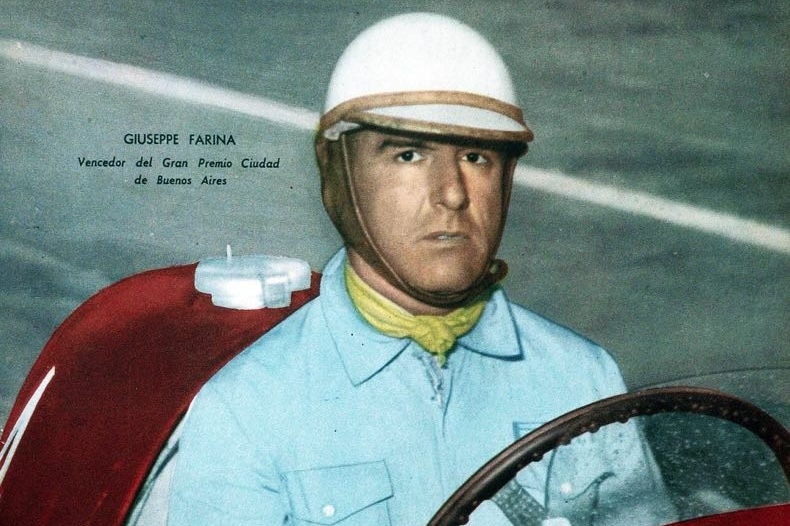

Formula 1 has many legends, both of the modern era and the earliest days of the sport. Names such as Michael Schumacher, Ayrton Senna, Juan Manuel Fangio and drivers such as Alain Prost and Niki Lauda are known to most fans of the sport, and of course we can include Lewis Hamilton on that list too.
However, only those who are really into the history of F1, or at least are really serious fans, will know the name of Giuseppe Farina. And even those who have heard of the pioneering Italian driver, who is usually referred to as Nino, may only know the very basics.
F1’s First Champion
Farina is most famous for being the man who won the first-ever F1 world title in 1950. The drivers’ championship was very different back in that inaugural season, with far fewer races than we have in the modern days of the sport.
The Italian was aged 44 at the time, which would make him a senior citizen these days – although Hamilton was 41 at the start of the 2026 season. However, back then drivers tended to be older, with Fangio taking glory in 1951 at the age of 40 (he was 46 at the time of his last title in 1957), while the third world champion, Alberto Ascari, was 34 in 1952 and 35 when he retained his crown.
Of these early champions, Fangio is the driver most readily remembered. The swashbuckling Argentine won the World Drivers’ Championship an incredible five times, including four in a row from 1954 onwards. He stood as the most successful driver in the history of Formula 1 until Michael Schumacher made it to six and then seven titles at the start of the 21st century.
Because of the exploits of Fangio, Farina has been overlooked, or even forgotten to a certain extent. However, nobody can take his place in the history books away. He was, and always will be, the first world champion of Formula 1. That was his only win, but if you are going to claim just a single title, the very first is surely the one to win!
Farina earned 30 points over the course of the season, which seems a paltry sum given the winner of a single Grand Prix takes 25 these days. However, there were just seven Grands Prix in that first season, and the Italian won three of them. Fangio also won three races and was on pole for four, compared to just two for Farina. However, in the end it was the Italian who came out on top, winning the title by three points.
Summary of the Groundbreaking Season
Six of the races took place in Europe, with the seventh, which was the third of the season, being the Indianapolis 500. The Indy 500 was won by home favourite Johnnie Parsons, but most of the leading drivers did not take part in it.
| Round | Race | Winner | Second | Third | Pole Position | Fastest Lap |
|---|---|---|---|---|---|---|
| 1 | Great Britain | Giuseppe Farina | Luigi Fagioli | Reg Parnell | Giuseppe Farina | Giuseppe Farina |
| 2 | Monaco | Juan Manuel Fangio | Alberto Ascari | Louis Chiron | Juan Manuel Fangio | Juan Manuel Fangio |
| 3 | Indianapolis 500 | Johnnie Parsons | Bill Holland | Mauri Rose | Walt Faulkner | Johnnie Parsons |
| 4 | Switzerland | Giuseppe Farina | Luigi Fagioli | Louis Rosier | Juan Manuel Fangio | Giuseppe Farina |
| 5 | Belgium | Juan Manuel Fangio | Luigi Fagioli | Louis Rosier | Giuseppe Farina | Giuseppe Farina |
| 6 | France | Juan Manuel Fangio | Luigi Fagioli | Peter Whitehead | Juan Manuel Fangio | Juan Manuel Fangio |
| 7 | Italy | Giuseppe Farina | Alberto Ascari and Dorino Serafini | Luigi Fagioli | Juan Manuel Fangio | Juan Manuel Fangio |
One thing the table above makes clear is just how dominant the top two, Farina and Fangio, were. In the six races they both contested, they had a clean sweep of poles and fastest laps, and they were undoubtedly the fastest drivers on the track.
The sport was, unfortunately, so much more dangerous back then, but the reliability of the cars was also a much bigger factor. The top teams retire very infrequently these days, but back in the 1950s and through till even quite recently, it was common for a number of the best drivers to have to retire for one reason or another.
A big reason for Farina’s ultimate success was that he managed to complete all but one of the six races he entered. In addition to his three race wins, he also finished fourth in Belgium and seventh in France. Only in Monaco did he fail to complete the Grand Prix. In contrast, Fangio was forced to retire in all of the three races he took part in and failed to win.
A Tight Contest


The scoring system awarded eight points for a win in 1950, with six for second, then four for third, three for fourth and two for fifth. One point was given to whoever set the fastest lap. Fangio and Farina both won three races, and both got three points for fastest laps. However, it was the latter’s fourth place at the Spa-Francorchamps circuit that made the difference.
Fangio won that day, despite starting second on the grid behind Farina. Alfa Romeo was the constructor for most of the top drivers of the time, and they had the front three in Belgium, with Fagioli third. Fagioli finished second, with French driver Rosier third, but though nobody knew it at the time, the three points Nino got for fourth place would ultimately decide the title race and earn him his spot in the history books as the first champion of F1.
Another Major First
Today, we remember Giuseppe ‘Nino’ Farina – the winner of F1’s inaugural world championship grand prix at Silverstone in 1950.
Farina, who also became Formula 1’s first world drivers’ champion, passed away on this day in 1966. The Italian driver was involved in a road traffic… pic.twitter.com/rLpp2DRWh2
— Motor Sport magazine (@Motor_Sport) June 30, 2026
The British Grand Prix, held at Silverstone, was the first race of the first F1 World Championship season. There had been Grands Prix before, but the race that took place on the 13th of May 1950 was the first World Championship contest, and it was Nino Farina who took glory.
This double first, winning the first-ever race of a world championship and also the first overall title, means that Farina simply has to be viewed as the first champion of the sport and a true pioneer. He was brilliant at Silverstone too, taking pole ahead of three other Alfa Romeos, driven by Fagioli, Fangio and home driver Reg Parnell. He completed a hat-trick too, adding the fastest lap and the race win to take the maximum possible nine points.
Farina was not the most loved of the racing greats, although racing royalty Enzo Ferrari called him “A man of steel inside and out, a man who was a racing champion in every sense of the word”. Like so many of the best in the game, he was ruthless and fearless, his bravery and will to win sometimes crossing the line in the view of certain contemporaries. Some also believed him to be haughty, aloof and even snobbish. But whatever anyone thought of Nino Farina, he was a magnificent driver and he was the first king of F1.